Directed by: Steven Soderbergh Written by: Scott Z. Burns Full credits at IMDb
The more prolific Steven Soderbergh becomes, the more his movies feel like perfunctorily adumbrated rough drafts--whether it's the half-baked 40s pastiche of The Good German, the vapid (if pleasurable) celebrations of jet-setting chic that characterized the Ocean's films, or the equally vapid (if less pleasurable) experiments with new technologies, like Bubble or The Girlfriend Experience.
His latest, The Informant!, a wobbly, tonally inconsistent spy farce slash character-study psychothriller, is an exercise in unreliable narration...
Written & Directed by: Cédric Klapisch Full credits at IMDb
Roman Duris, doing his Dans Paris dour, plays The Great Enunciator in director Klapisch's Paris (sans Dans), an overly broad survey of the City of Lights through glimpses of those that live within it--a portrait of "ritzy, shabby, trashy Paris," as one character describes it, told through ditzy, flabby, flashy filmmaking. A dancer dying from a bad ticker, Pierre (Duris) people-watches from his balcony, espying many of the film's characters from a divinely aerial vantage point; their narratives are like his fantasies, making him a stand-in for the clearly curious Klapisch. There's the frustrated professor (Fabrice Luchini); the single mother (Juliette Binoche); the men and women who man the fruit markets; the bitchy bakery owner; and, marginally and for good measure, an African immigrant who spends the bulk of his time in Africa.
Written & Directed by: Bob Byington Full credits from IMDb
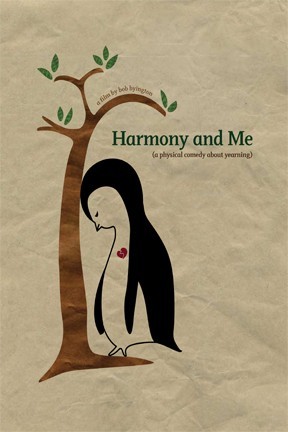
"You know how when you're watching a movie," Jessica (Kristen Tucker) says near the middle of Harmony and Me, "and you're half-way through and you realize you don't care about the characters anymore?" Uh, yeah, are you kidding? I feel that way right now! It takes some majorly misguided chutzpah to allow such cheeky self-consciousness into a movie that feels like a glorified student film, a movie that has nothing going for it: not its ghastly DV aesthetic, not its mangled sense of humor, not its go-nowhere narrative, not its casual non-performances, not its haphazard editing. The characters? Forget about it.
Directed by: Robert Schwentke Written by: Bruce Joel Rubin Full credits at IMDb
The first rule of pretty much every time travel narrative is that you can’t interact with yourself. The Time Traveler’s Wife violates that fiat in the very first scene, forcing audiences to concede that the rules of time travel are arbitrary—which is good, as the movie’s own rules seem not only arbitrary but perfunctory. In that first scene, a grown man comforts the ten-year-old version of himself following a car crash and the space-time fabric doesn’t fall apart. Unfortunately, the same can’t be said for the movie.
If you cut through the romantic veneer that thinly blankets The Time Traveler’s Wife, the epitome of manipulative women’s weepies, you find the creepiest Tinsel Town picture since the pedophilic and incestuous 17 Again: at root, it’s the story of a violent, alcoholic, kleptomaniacal exhibitionist who uses his Billy Pilgrim-esque travel habit to seduce a 10-year-old girl. Eric Bana plays that unlikely hero, whose “genetic anomaly” causes him, at random, to bounce through time (without his clothes); Rachel McAdams plays the grown-up version of that little girl, visited throughout her life by that grown and naked man.
The time travel invites multiple readings, the most obvious of which is that men are unreliable—they’re never around! It also raises identity issues: is our younger self the same as our older self? Which then raises some bizarre moral dilemmas: is it OK to make out with a time traveling younger version of your husband? Is it cheating? Unfortunately, these potentially compelling thematic threads are stuffed into an inert drama whose thin conflicts are based around the petty problems of the upper classes. (McAdams, already from a wealthy family, never has to work again—not that her hands were developing calluses—after Bana uses time traveling immorally to win the lottery.) Seriously: if you can’t conceive, adopt. If your husband isn’t around as much as you’d like him to be, get a hobby.
Yet for all these complaints, The Time Traveler’s Wife isn’t terrible: Schwentke directs serviceably, staying out of the way and, thank god, taking it easy on the swelling melodramatic music; the narrative coasts along on its (incoherent) gimmick and the charm of its stars—and, for some reason, its epic love story, even though the film pitches love as entrapment; McAdams is not subject to fate but to mortal design. “I couldn’t change even if I wanted to,” she admits. For some reason, people (the Twilight crowd?) find this romantic. Grade: C+
Directed by: Dominic Sena Written by: Jon & Erich Hoeber and Chad & Carey Hayes Full credits at IMDb
Like Christopher Nolan's Insomnia, Whiteout, a frost-blooded murder mystery, transfers the Scandinavian trend in cold-clime detective fiction—albeit more prevalent in novels like The Girl with the Dragon Tattoo than in film—to American soil: though here we're not in Palin country like in Mr. Batman's Pacino-led remake, but on a U.S.-controlled research base in Antarctica. As such, the film evokes another recent trend: the global warming horror movie.
Though global warming gets namechecked only once in Whiteout, and off-handedly, it's the ever-present subtext; the film transforms the culture's climate change anxiety into a polar panic, like the recent The Last Winter. There's no supernatural element here, no mystical spirit warriors freed from their icy prisons like in Larry Fessenden's gonzo allegory. But this film's murder rate is unbound when a buried artifact is loosed from its frozen tomb, the message being: what's buried ought stay buried; there's nothing but trouble under the ice—so don't let it melt!
Written & Directed by: Roy Andersson Full credits at IMDb
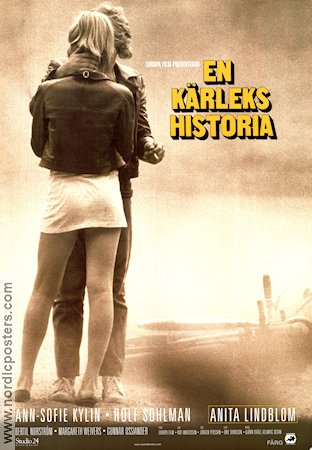
The 40-year-old A Swedish Love Story (En Kärlekshistoria) is radically different from writer-director Roy Andersson's recent work in that it isn't radical at all. Unlike late-career comebacks Songs from the Second Floor and You, the Living, this movie has scenes that add up to a narrative, within which the camera cuts--and, sometimes, it even moves! It does so to capture the budding romance between Annika (Ann-Sofie Kylin) and Pär (Rolf Sohlman), thirteen-year-olds whose turn-ons include pinball and strumming guitars. Andersson nails the rhythms and the details of the courtship process: for the first half of the film, the kids communicate only through silent, sidelong, pseudo-secret glances while pouting their lips, sporting leather jackets, smoking cigarettes and awkwardly struggling to project cool...
Sometimes, a movie's not the best way to tell a story — especially when it comes to non-fiction. Too many recent documentaries fail because they take compelling topics and turn them into bland films: Standard Operating Procedure was a far more insightful New Yorker article than a movie; the cheaply constructed Who Killed the Electric Car? could have been streamlined into a superior Wikipedia entry. But We Live in Public, about "the greatest internet pioneer you've never heard of," serendipitously avoids this pitfall by taking video as its subject. You need to see it in order to understand it. Chronicling the career of Josh Harris, web-video pioneer and social-networking social-experimenter, the movie examines the net-kid's decade-old happenings, then merely eccentric, and lays blatant their prescient relevance: Exposing, pre-9/11, the disastrous results of freely surrendering one's privacy to a new, intrusive technology — The Web — Harris is like a time traveler: it's like revealing the carcinogenic properties of cigarettes while Sir Walter Raleigh was still learning to roll.
You know me: I can’t stand W.W.IImovies; lately, each one, domestic or foreign (the lovely Kaibei excluded), has been a cliché-ridden exercise in facile tear jerking and/or Hollywood Prestige award-baiting. Inglourious Basterds, too, is chockablock with genre clichés, but Tarantino’s ingenious coup is to replace one set of tropes with another: as you point out, his latest is a Western, spaghettisploitation with a National Socialist twist, merely disguised as a war movie. When [SS Man] Landa shows up at the Frenchman’s house in the first scene, it’s like a railroad baron appearing at a dirt farmer’s cabin. With one frame, he pays obvious homage to the last shot of The Searchers, and the whole movie, like the Kill Bill dyad, feels like one long tribute to Once Upon a Time in the West. (The opening title card even reads, “Once Upon a Time in Occupied France”. He must watch Leone’s movie, like, every day.) As such, he gives the W.W. II movie a much-needed kick in the ass.
Keep reading my discussion with Benjamin Sutton at The L Magazine
Written & Directed by: Olivier Assayas Full credits from IMDb
Assayas’ enchanting and elegiac study of mortality and objects, Summer Hours (L'Heure d'été), is a film about artifacts—about the significance and essential value of our precious possessions. The film takes as its subject the countryside home of a long-dead artist and the pricey to priceless paintings, furniture and other various objets d’art that fill it. His niece, Hélène (Edith Scob), cares for the property when the film opens, but she is on the verge of death herself, leaving her three children—Frédéric (Charles Berling), Adrienne (Juliette Binoche) and Jérémie (Jérémie Renier)—to decide the fate of the estate. Those three actors have a remarkable conviviality; combined with Sandrine Mauvezin’s thorough set dressings—cluttered old houses; cramped, book-lined apartments—Summer Hours has a deeply lived-in quality, which helps lend authenticity to its emotions.
Those emotions reveal themselves subtly; despite the occasional on-screen bickering between the siblings, Summer Hours is a calming film—the first word that came to mind after leaving the theater was “lovely”; it’s just a lovely film—largely set around bowls of fruit and al fresco lunch tables. The squabbling that does occur emerges largely from the siblings’ disparate philosophies on what to do with Great Uncle’s things: Frédéric has a nostalgic reverence for them, particularly two Corots, and wants them to stay in the family; Adrienne and Jérémie, taking after their mother—“no need to become keepers of this tomb,” she tells her children before she dies, of this “bric-a-brac from another era”—see the pieces as saleable, as equity. (Not coincidentally, both pro-sale siblings no longer call France home, which suggests something about a globalizing world with no more room for wistful, narrow-mindedly ethnocentric Francophiles.)
There’s tragedy here; while Hélène’s children view some individual items with tender hearts, the collection taken together boasts a value that transcends mere sentimentality. Imbued with memories and bits of a person, they come to represent, if not embody, a family and its shared lives. They’re “life’s residue,” as meaningful as a memory, a photograph, a headstone. The film’s opening shot, a flickering image of the house—and the subsequent Mizoguchian tracking shot of kids and dogs running down trails and climbing trees—sets the misty-eyed tone, the pining for the bygone that carries through the film.
But Assayas is no naïve romantic; for him, objects possess a dual function: they are meant to be used, but also valued. Statues should be displayed, even if they run the likelihood of smashing into pieces. At the end of the film, we see unsupervised and promiscuous teens at the house, boozing to blasting hip-hop without regard for the history of the grounds on which they’re partying; it’s equally dismaying when, right before that scene, we see many of the house’s valuables isolated from their functions, stored behind the velvet ropes and display cases of the Musee d’Orsay. Both approaches get it wrong: the house is meant to be lived in but not debauched; the items are meant to be utilized, not admired from behind glass. Our heirlooms are meant neither to be ignored nor revered.
When Frédéric allows the house’s longtime keeper to take something as a memento, she chooses a simple vase because she thinks it’s “ordinary”; unbeknownst to her, it turns out to one of the collection’s more valuable pieces. Assays suggests that the only real value objects possess is the one we assign to them—so what’s regrettable here isn’t that precious things have lost their value. It’s that, in this crass world of mass-produced sneakers, we’ve stopped assigning any value to the meaningful things we own. Desks are no longer passed down from generation to generation; we make desks to be thrown away. The real tragedy is that snipped thread of historical continuity and consequent nihilism. Grade: A-
Written & Directed by: Andrew Bujalski Full credits at IMDb
No one should deny that Andrew Bujalski does one thing really well: He crafts sensitive, masterfully performed films about contemporary youngsters and their inability to commit or communicate. The debate lies in whether such a narrow focus on such a slight concern has begun to wear thin—and so short into his career!—or whether it was ever thick enough to begin with.
Bujalski is the Apatow of the Underground; as directors, both have only threefilms under their belts, but each has spawned a movement so pervasive that it has nearly rendered their own films superfluous. Apatow gave us the modernBromance; Bujalski has given us muh…muh…mum…don’t make me say it! He sets his latest, Beeswax, in Austin, which invites (unfavorable) comparisons to Slacker, Richard Linklater’s one-generation-ago chronicle of directionless youths. The edge-of-thirty types here, both un- and mis-directed, may be a bit less vigorous in their opposition to work than their ‘90s forebears, but the most glaring difference between the two sets of Texans is in degrees of eloquence: slackers were hyperarticulate; Bujalski’s mutterers are decidedly not, which may be what separates them not only from their immediate predecessors but from all generations prior. It’s what makes them historically unique and thus, ostensibly, worthy of being the subject of a decade-long oeuvre.
Goddam, even the cellphones are broken in Beeswax: the characters literally (and figuratively) cannot fucking communicate with one another. (Bujalski’s symbols dance on that fine line between clever and too clever.) They’re characters who couch their definitives in qualifying maybe-sortas; they’re wishy-washy, too. Lauren (Maggie Hatcher) opens the film by suggesting to her boyfriend that they “try” breaking up; her sister’s ex-boyfriend, Merrill (Alex Karpovsky), is introduced taking a practice bar exam, agonizing between multiple choices. But it’s Lauren’s sister Jeannie (Tillie Hatcher; she and Maggie are twins) around whom the plot revolves. She runs a vintage boutique with a largely absent business partner, with whom her relationship is becoming increasingly antagonistic. Except, they never really confront one another; in actual conversation—like, over the phone—they just say, “we’ll talk later,” as in, never. They can only tell each other how they feel through mediated means: emails, legal contracts and subpoenas.
Beeswax, which jokingly has been called a legal thriller since it’s anything but, is a bit plottier than previous Bujalski features and more streamlined than, say, Mutual Appreciation (whose bloated running time felt self-indulgent), even though it still feels under-edited. I guess that’s the point of a Bujalski movie, though: to highlight the masterful-to-the-point-of-painful naturalism of his stammering non-professional performers—to show how our struggles with language inform our struggles with relationships, both romantic and platonic. Though I feel like, I get it already. If that’s all that he’s after, then at this point, what’s the point? Grade: B-
Written & Directed by: David Lynch Full credits at IMDb
A dispatch from Lynch’s pre-Lost Highway accessible phase, Wild at Heart won the Palme D’Or at Cannes, though many critics maligned it: classic Lynch-hater Roger Ebert called it “sophomoric” and “dishonest”. Dishonest? But it grapples with the central fascination at play in much of the director’s early work: young lovers under threat from enormous criminal conspiracies. Nic Cage, before he became the self-parody he is today, stars as Sailor, clad in a snakeskin jacket that serves as a symbol of his individuality and his belief in personal freedom; a pre-Jurassic Park Laura Dern serves as his love interest in a performance so strong she makes you cry just by nipping at a candy necklace. He’s Elvis; she’s Marilyn. Gangsters chase the two across the country, and the film settles into a road movie, traveling through a Lynchian landscape of grotesques from Jack Nance to Willem Defoe. All the while, the director expresses his love of Americana and for cultural stuffs that predate the sexual revolution. Sailor sings “Love Me” and “Love Me Tender,” for example, but the work most on Lynch’s mind is The Wizard of Oz. At root, Wild at Heart is a trip down a yellow brick road — one that runs through the recesses of the director’s infamously nightmarish subconscious.
From the Program Notes for The L Magazine's SummerScreen series. Wild at Heart screens this evening.
Directed by: Neill Blomkamp Written by: Terri Tatchell & Neill Blomkamp Full credits at IMDb
The director of District 9, the fairly ambitious, sometimes fake-documentary about extraterrestrial settlements in South Africa (and accompanying government perfidy), has been making the rounds, telling reporters his film is an allegory for apartheid. It’s unusual for a filmmaker to be so blunt about his film’s Meaning: it seems to imply that Blomkamp is a bit desperate to establish that his is a Serious Film—that the blockbuster-of-the-week guise is but a mere trapping.
That proves to be more of an albatross than a virtue: because District 9 packs some social-issues seriousness into its sci-fi wackiness, I’m tempted to hold it to a higher standard than it could live up to; the movie is superlative popcorn fare, but disappointing Cinema...
Keep reading my discussion with Benjamin Sutton at The L Magazine
 The more prolific Steven Soderbergh becomes, the more his movies feel like perfunctorily adumbrated rough drafts--whether it's the half-baked 40s pastiche of The Good German, the vapid (if pleasurable) celebrations of jet-setting chic that characterized the Ocean's films, or the equally vapid (if less pleasurable) experiments with new technologies, like Bubble or The Girlfriend Experience.