Writer-director Barry Jenkins’ “don’t call it Mumblecore!” debut examines the black hipster in a vanillafying San Francisco. Micah (Wyatt Cenac) and Jo’ (Tracey Heggins), of the city’s meager seven percent black population, have a one-night stand that reluctantly grows into a two-night affair. Lollygagging, à la Before Sunrise, through Frisco the Morning After, they wander (or bike) between apartments, museums, cafés, carousels and discothèques, usually chatting about gentrification and African-American identity. Too often that dialogue smacks of college-freshman outrage — “who gives a shit about what society thinks?” — and stale insight, though its identity-crisis concerns and sense of injustice are well-intentioned.
Directed by Larry Fessenden Written by Larry Fessenden & Robert Leaver Full credits from IMDb
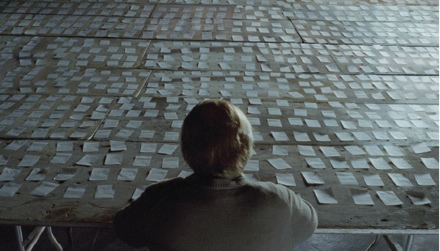
It might not be as edifying or as action-inspiring as An Inconvenient Truth, but the fictional The Last Winter is sure a hell of a lot more fun. Both touch on similar themes: global warming, the destructive effects of oil. But director Fessenden lacks Al “Look at Me!” Gore’s shameless self-promotion and stern lecturing tone; instead, he dramatizes the cost of climate change with transcendental lunacy. It’s a horror movie, set in Palin country—ANWR namely—which Fessenden often shoots from the air as a white, desolate tundrascape, broken only by the occasional rock, orange flag or rickety station house. “Pure white nothingness,” one character observes. “It looks like the last place on Earth.”
Stationed at this remote location, and dependent on visitors for fish, cigarettes and romance novels, a crew of oil company employees performs quotidian duties and scientific tests while waiting for the drilling to begin. Simpleminded debates about environmental preservation versus energy independence—between a crusty oilman (Ron Perlman) and the environmental supervisor (James LeGros), the Zelig of oil disasters—take a backseat to Fessenden’s graceful filmmaking style: the neon-green spotlighted compositions in the pitchblack Alaskan night, the blinding light of day reflected off the endless plains of snow, the reverse tracking shots that slowly move away from stationary subjects down narrow hallways.
With creepy style, Fessenden suggests that something isn’t right in Alaska, beyond the fact that temperatures are steadily rising and the tundra is thawing for the first time in thousands of years. Perlman wants to get his equipment up there by any means necessary, while LeGros cautions against it. Unlike the petty human dramas, including a love triangle playing out among the team, the film at first suggests that nature is emotionless: it simply adapts to changes, and we’re left struggling to survive. Except here the extreme climate changes seem to be unleashing Mother Nature’s warriors: either evil spirits or crazy-causing gases.
Fessenden’s film recalls several other stories: as an outpost horror movie, it evokes Christian Nyby and Howard Hawks’ The Thing from Another World; later, as a wilderness survival movie, it recalls Jack London’s “To Build a Fire” and Akira Kurosawa’s “The Blizzard,” from his Dreams. And it evokes The Mist, with its space-madness-on-earth strangers stranded together amid mortal dangers, though it’s anti-Exxon rather than anti-military.
Before he gets all apocalyptic about the end result of global warming, Fessenden gets metaphysical about it, pitching oil drillers as grave robbers and the real threat of global warming as “something beyond science,” namely the unleashing of hitherto entombed ghosts; oil, after all, used to be fossils, frozen deep under the Alaskan earth that oil-burning is now freeing from its icy prison. The Last Winter is an intriguing and finger-pointing addition to the global warming canon that’s still sufficiently wacky to be a thoughtful hoot. And isn’t it by making something fun that you teach people to take it seriously? Grade: B+
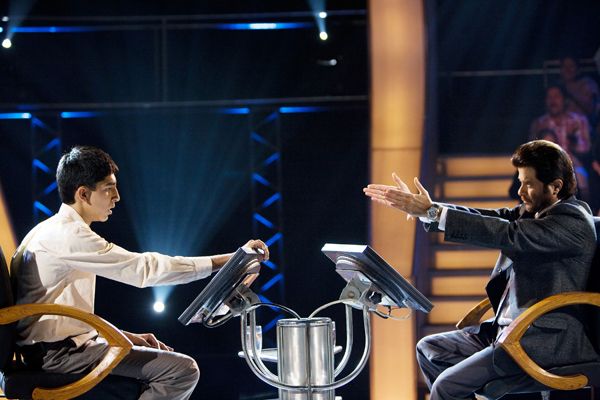
In the middle of Slumdog Millionaire, Danny Boyle’s stylized and hyperkinetic crowd pleaser, a woman expounds on the appeal of Who Wants to Be a Millionaire?. “It offers a chance for escape, doesn’t it?” Not for our hero, Dev Patel, a contestant on the show, for whom it functions like the brink of death, provoking his life to flash before his eyes and forcing him to confront the painful narrative of his life story up to now.
Pitched between artifice and authenticity, the film succeeds as neither. Patel plays a slumdog, low on the Indian caste system, who has won millions of rupees on the trivia-testing gameshow, leading the authorities to believe he’s cheated. After police interrogate him (with, er, enhanced techniques), Patel reveals a series of personal anecdotes, each of which ends with how he learned an answer to a question from the show. (This being a Danny Boyle film, one such tidbit includes swimming in shit.) His childhood reverence for Bollywood stars; his orphaning by anti-Muslim mobs; his time with eye-gouging beggar-managers (reminiscent of Pinocchio’s Pleasure Island sequence); hustling tourists at the Taj Mahal; and so on.
What begins as a neat narrative structure is soon revealed as gimmick, as each anecdote and its usefulness in the present becomes increasingly absurd. But, after all, this is a gimmicky film, not least of all in its music video aesthetic. By trade, Boyle is a flashy filmmaker, but even he outdoes himself here with the rat-a-tat edits, the canted cameras, the unreal citrus-colored lights and the scrunching close-ups. Slumdog is so MTVed as to border on the incomprehensible, all the more criminal as its intricate production design—trash-strewn lots packed with people, cars and hovels—gets lost in the cuts. (At first I thought this might be a clever means of representing the jumbled memory of juvenescence, but the aesthetic continues into the present-day.) It feels like a music video’s view of child poverty, amplified by the M.I.A. on the soundtrack during the time-skipping montages. Boyle’s not really taking his material seriously—but then why is the script always so damn serious?
Slumdog Millionaire tries to touch on themes of third-world poverty, fraternity and betrayal. Jumping between genres, as is Boyle’s wont, the film switches between police procedural, epic romance, gang movie and life on the streets picture. Boyle borrows the Angels with Dirty Faces model of childhood friends (here, brothers) who wind up on divergent paths: one a gangster, the other gone straight. One way to make a lot of money, the filmmakers suggest, is with a gun; of course, that way of life ends by the gun as well. The other is to use your head. Perhaps without realizing it, though, Slumdog perpetuates that old myth about the nobility of poverty. You don’t get smart by staying in school—real learning, from trivia to how to survive, happens on the streets. So the poor are lucky to be poor. That the slumdog is vindicated at the end, and turned into a Mumbai-electrifying folk hero, frees the audience from responsibility for the underpriviliged; as long as they hustle harder to get onto TV, they’ll be fine.
Boyle only says this accidentally, though; Slumdog really wants to say nothing at all, to abandon all its half-introduced ideas—including how modern office complexes are literally and figuratively built on the foundations of the slums—to build to an extravagant Bollywoodesque dance number. The film makes pretenses toward serious filmmaking, but it’s only escapism, trading in pure pap. Which is fine, I guess—but then why’s it winning awards? Grade: B-
Directed by: Steve Carr Written by: Kevin James & Nick Bakay Full credits at IMDb
Grade: 2/5
A disposable, family-friendly Kevin James comedy? From the director of several Eddie Murphy, Martin Lawrence and Ice Cube turkeys? It must be that post-prestige dumping season the ticket buyers call January. But to Paul Blart: Mall Cop’s credit, its heart is in the right place for these dark recession-depression days, defending the consumer at the expense of the corporation. Mall Cop is split into two parts: the first, a depressing portrait of a loser; the second, that loser’s feel-good redemption. (The test audience with which I saw the movie, God help us, literally cheered.)
More people must die in The Curious Case of Benjamin Button than throughout an average explode-‘em-up Hollywood picture. And that’s saying something. Infused with death and obsessed with mortality, the film is ostensibly about the passage of time as it relates to the ephemerality of life. “Babies are born, people die,” the title hero (Brad Pitt) says, and that’s the gist of the movie. It opens with a short parable about a blind clockmaker and his backwards-ticking timepiece that sweetly demonstrates the painfulness of time’s irreversibility. It then spends over two irreversible hours examining that theme more closely.
Loosely, and I mean loosely, based on a novella by F. Scott Fitzgerald, Benjamin Button does concern a curious case: the eponymous Button was born old and is aging backwards, and the film is about the lifelong love affair he had with a childhood (so to speak) friend (Cate Blanchett) in between their 20th Century adventures. Any hopes for poignancy to be wrung from that set-up are dashed by a lazy script from the pseudo-prestigious Eric Roth (Forrest Gump, Munich). Although Button is a fictional construct, the movie closely follows the convention of the biopic—short scenes tied together by voice-overs and montages—and, like that genre’s famous offenders (e.g. Ray), it deals largely in vapid clichés. Life is precious, live it to the fullest, don’t be afraid, you’re only as old as you feel—that sort of pablum. “Life’s a funny thing,” said in voiceover, is more saccharinely meaningless than even “life is like a box of chocolates.” In Benjamin Button, you usually know what you’re going to get: simplicity and facileness, including cartoon supporting characters like the crusty tugboat captain, the magical black Southern servantry, the revival tent preacher, ad nauseum.
But Fincher does his darndest to raise the movie above the level set by its lamentable script. After becoming the toast of Critics’ Town with the grim and gritty realism of the violent and obsessive Zodiac, Fincher tries the generic opposite—a romantic fantasy. His formal mastery is still fully present, from the melancholic amber haze that suffuses the bulk of the film—the dim but thick lamplight textures courtesy Harris Savides—to the intricate period design and visual effects. (Thanks to computers, Pitt plays Button in nearly every stage of his life, including when he looks like a midgeted, wheelchaired Cheney.) Roth inserts a throwaway motif—a man who often mentions how many times he was hit by lightning—but Fincher illustrates each example with footage that looks like it was shot for Mac Sennett, turning a repetitive joke into a successful running gag.
Thanks to touches like these, Button avoids the abject failure a lesser director (coughcoughRobertZemeckiscoughcough) would surely have created. But the one thing Fincher can’t direct his way out of is the film’s absurdly long first act, which threatens to turn the story into mere gimmick, used to support a silly fable. I get it, he ages backwards; Button is overstuffed, in love with its CGI and set dressings. A whole reel about an affair in turn of the ‘40s USSR with Tilda Swinton, shot like a cross between Ingrid Bergman and Carmen Sandiego, adds little to the story but time. Fincher still manages to maintain the fantasy’s credibility, again flaunting his skill, and by the third act—the last 45 minutes or so—Button, hitherto a parade of insipid insight, unexpectedly finds strength in the simplicity of an inevitably tragic love story. After the closing credits, I sobbed the whole way to the bar.
Fincher maintains the fantasy’s credibility largely by divorcing the film from history. Though the film is framed by Blanchett’s daughter reading Button’s diary to her deathbed-bound mother—vaguely reminiscent of Edward Scissorhands’ frame—while Hurricane Katrina approaches their New Orleans hospital, the movie doesn’t hit very many real life touchstones, keeping us steeped in the film’s impossible logic. The Great Depression goes unmentioned, WWII is only briefly acknowledged (because otherwise the Senior Matinee Crowd won’t help build sufficient Oscar buzz), and the ‘60s are established with a spaceship launch (gorgeous!) and the Beatles on television (dangerously Gumpy). The Katrina frame actually turns out to be meaningful, although it doubles as one of the ways that Roth frequently tries to draw a comparison between Benjamin’s otherness and that of the African-American community, to an effect somewhere between offensive and laughable. Button was born on Armistice Day, the end of that generation’s greatest slaughter, and his love dies on hurricane touchdown, arguably this generation’s greatest disaster (hitherto). Although the final shot seems like the filmmakers may have simply exploited the tragedy to find a visual expression for The Floodwaters of Time, this is, after all, a movie about death. So shouldn’t it end with a whole hell of a lot of it? Grade: B
In the most “controversial” scene of last year’s Tropic Thunder, Robert Downey, Jr., playing an actor in blackface, cautions Ben Stiller, also playing an actor, about the dangers of going “full retard." He argues that no actor wins an Academy Award unless the character is only partially handicapped: Rain Man was an idiot savant, Forrest Gump merely “slow”.
The satire cuts like safety scissors. It had been seven years since Sean Penn, the most recent target of the joke, went “full retard” in I Am Sam, earning him an Academy Award nomination. (He lost to Denzel Washington, for the intellectually challenged Training Day.) The mentally handicapped thing is so over; Penn is already on to other things, generating Oscar buzz for his role in Milk as the title’s openly homosexual politician.
Ordinarily, a movie that’s named after someone tends to be about that person. Well, Steven Soderbergh bucks that trend. Che Guevara (Benicio del Toro) appears in nearly every scene in Che: Part One, but he is more an omnipresent face than a character—an abstraction, an icon from a t-shirt more than a man. We know he’s a Marxist, a soldier and a doctor because we see him act out all three, from firing guns and treating wounds to delivering socialist speeches. But isn’t a man more than the sum of his occupation and ideology?
The Argentine opens in Mexico City, with dorm room-style bull sessions between Che, Fidel and the whole guerilla gang about the disparity of wealth and power in Cuba. It quickly moves into that country’s sun-bathed jungles—Soderbergh himself provides the gorgeous cinematography under his standard cinematographer pseudonym “Peter Andrews”—from the early army-forming stages to Batista’s abdication and the triumphant march into Havana. In between, Soderbergh cuts between firefights, political argument and discussions of military and political strategy. He includes scenes of post-revolution Che speaking at the U.N. and being interviewed by journalists, so that the requisite political speeches can emerge from the drama organically—if conspicuous artifice can be deemed natural. Shouldn’t a movie about revolutionaries be, well, more revolutionary? More radical in its form?
The filmmakers present Che as a man opposed: angry protestors greet him outside the U.N., political enemies greet him inside; reporters ask him tough questions; he butts heads with Fidel and other comrades. But in these filmmakers’ hands, Guevara never comes across as anything less than a hero, a noble freedom fighter. The Batistas are conspicuously the Bad Guys: they shoot their own men, launch bombs into populous neighborhoods. They represent death; the revolutionaries, life.
But for all of the radical—particularly for an American director—speechifying, the scandalous celebration of the socialist, there aren’t a lot of ideas in Che: Part One. The filmmakers are more interested in process; despite some lip service to Marxist ideals, the film is about how the war was won, not so much by whom, let alone why it was fought. It’s a primer on how to build and conduct a revolution—an exciting war movie and edifying history and civics lessons populated by textbook-torn historical figures. Real moments of humanity are glimpsed only fleetingly. Early on, we learn Che has asthma, which leaves him wheezing in the jungle, helping to establish his vulnerability. And that’s that.
Perhaps process and tactics enthrall Soderbergh because he comes from a country of apathetic and well-behaved citizens who haven’t fought a real revolution in at least several decades. He might mean to encourage his countrymen—and women (Che has a feisty revolutionary sidekick reminiscent of West Side Story’s Anybody)—to learn to take up arms, to be inspired to risk their lives for something they believe in. Then again, the scenes of urban warfare immediately evoke thoughts of the current conflict in Iraq. Maybe he wants to teach us how one man’s terrorist is another man’s freedom fighter. And how he who wants it more is he who wins the war. Either way, Che is a totally inappropriate title. Grade: B
A bug lurches its head over the edge of a Manhattan skyscraper’s rooftop and watches the bustling Midtown mobs below. “Look at the humans ones down there,” the insect says. “They look just like a lot of little bugs.” The point being that we are the bugs—and they are us—in Hoppity Goes to Town, by contemporary standards a politically radical animated feature that pushes a progressive, quasi-socialist agenda in its depiction of a multi-species insect community harassed by land owners and, more severely, by shadowy and impersonal humans who function as fire-crashing, town-destroying Old Testament gods: callous at best and malicious at worst.
Also known as Mr. Bug Goes to Town and Bugville, Hoppity was the second feature film from Fleischer Studios, following Gulliver’s Travels two years earlier. Known for their shorts—Popeye, Betty Boop, Superman—the Fleischers were the only serious U.S. rival to Disney and its fledgling features division until this film’s failure: the Fleischers were removed and the company, renamed, resumed producing shorts. Hoppity, then, is a sort of small scale Heaven’s Gate, though it’s not a bad picture; its failure had to do more with a stroke of incredible misfortune: it was released in 1941, two days after December 7.
The title plays on Frank Capra’s film about Mr. Deeds, and it’s inaccurate; Hoppity, a lanky, Jimmy Stewartish grasshopper, does not “go to town” so much as he returns to his close-knit community—a weedy, overgrown lot in Manhattan—to find it in hard times, suffering frequent fire outbreaks from carelessly discarded smoking materials; a wealthy beetle maliciously plotting to steal a honey-peddler’s daughter; and the threat of neighborhood annihilation in the face of skyscraper construction. Sadly, there’s something so familiar about all of the buggy troubles in Hoppity: the misery of foreclosure; the forced sacrifice of happiness for security; the destructive effects of overdevelopment. When dreams of a new, Edenic garden home are flushed with a flood from a busted sprinkler, I couldn’t help but think, absurdly, of Hurricane Katrina.
Hoppity is both class and environmentally conscious. The bugs are exploited by a jowly beetlebaron, who’s exploiting their unfortunate situation for profit. But the real threat to the bugs is mankind (despite the picture’s odd reverence for postmen and songwriters—tunes by Frank Loesser and Hoagy Carmichael, though, excepting the lilting “We’re the Couple in the Castle,” they’re not as lovely as those names might suggest.) Unlike Wall-E, though, the movie’s not about humanity’s propensity to litter; repurposed detritus, in fact, makes up a bulk of the bugs’ world. As they can turn grass blades, flowers and spiderwebs into a wedding chapel, so too can they turn a harmonica into a pipe organ; a lady’s compact into a ritzy bed; a postage stamp into a poster. The animation’s clever and detailed backdrops are its greatest virtue.
Conspicuously anti-smoking (watch where you throw yer matches and half-smoked cigars!), Hoppity is also worried with gentrification, the torching of tenement towns and the elimination of open spaces. It ends happily of course, with all the bugs’ dreams fulfilled, but not before exposing the gang of insect heroes, in one final act of cynicism, as a nasty mob quick to complain and cast blame. They are an ungrateful society of buck-passers; there are few true good-guys here. It’s not often that kids’ movies assume such a provocatively nasty position on the world and its inhabitants. If Wall-E marked a grand return to the intelligent and responsible animated feature, rediscovering Hoppity helps to reveal the deep dark roots of the tradition. Grade: B+
Proposition 8 aside, the 70s were not like these post-Will & Grace days. Milk, a middlebrow, awards-season biopic about one of the country’s first openly gay elected politicians, opens with archival news footage of gays being arrested en masse for patronizing gay bars. Through these clips, Van Sant suggests that anti-homosexual prejudices in America have waned somewhat in the last several decades. But by raising the specter of bias he urges the audience to recognize the prejudice that homosexuals still face today, as perhaps the last sizeable demographic to be denied, on paper, their full civil rights. Milk throbs with gay pain: midnight phone calls from suicidal strangers, fear of every stopping car on the nighttime streets and of violent parents, gruesome threats of death and castration, forced discretion for fear of employment termination. When spontaneous political protest breaks out mid-film, stoked by Anita Bryant’s much-publicized homohating rhetoric, the eponymous Harvey Milk (a flamboyant Sean Penn) addresses a crowd with shrieking fury. “I know you’re angry…I’m angry!” That anger is palpable, stirring and fist-clenchingly infectious.
Elected San Francisco supervisor, akin to a city councilman, Milk served nearly a year before a fellow supervisor, Dan White (a moody Josh Brolin), assassinated him in 1978. The film opens eight years earlier, taking us through Milk’s move to Castro Street, his rise to political figurehead, and his ultimate death. But more than merely profile a person, Milk chronicles an era, a population and a mood; as much as it concerns the many lost elections of Harvey Milk, the film is about fear and despair transformed through the efforts of a political leader into something like optimism. There’s a conspicuous Obama parallel here, particularly as Milk, after several failed campaigns, successfully runs on a platform of “hope”; the film’s penultimate lines are “without hope, life is not worth living.” (Sorry McCain!) The film’s timeliness extends into the recent battle in California over Proposition 8; here, the villainous referendum, which would have fired all gay teachers and their supporters, is Proposition 6. But, more than tease the audience with easy parallels to contemporary headlines, the film aims to educate it about the deplorable discrimination homosexuals faced and continue to face—the arguments about preserving the American family in the film, set 30 years ago, are frighteningly familiar—and to promote Mr. Milk’s idea that gays should come out of the closet because if straights and squares know a gay personally, they’re less likely to support legislation that oppresses them.
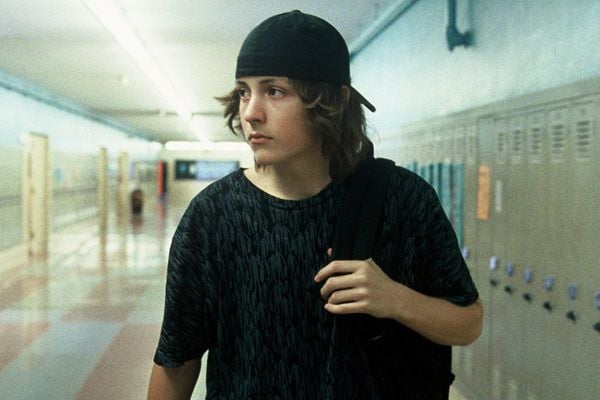
As advocacy and history lesson, Milk is surprisingly affecting, brought to life by the actors and period setting’s emotional details; to many, including myself, the abuse of homosexuals throughout the 20th Century is as foreign as the realities of the Jim Crow South. As a film, however, it’s a dully familiar exercise in lifestory. Director Van Sant seems to have reverted to his Good Will Hunting self after nearly an entire decade, and four brilliant films, as an indie darling—the “IFC Bela Tarr”—crafting challenging cinema from the margins of the moviemaking community. Milk, in contrast, is a conventional, Oscar-baiting Prestige Picture, particularly on the page; its story flows too neatly—Milk switches from Republican businessman to radical activist nearly overnight—and follows the tired formulas of the cut-down-hero-on-the-rise storytelling arc, including, shamelessly, a climactic goodbye phone call between torn-asunder lovers. While Van Sant uncharacteristically ties up most of his loose ends here, he neglects the only one he needed to. His last several films have highlighted action over motive, and it’s one of the few motifs to continue into Milk. But because this film’s trappings are so mainstream, the lack of a credible motive for Milk’s assassin comes off not as provocative but as screenwriter oversight. The “he’s a closet case” rationale the filmmakers offer up several times seems nearly as absurd as the killer’s real-life “Twinkie Defense,” in which White claimed that a night of junk food binging had created a chemical imbalance in his brain.
Van Sant is too smart a filmmaker, though, to let his film collapse entirely under the weight of the mass-digestibility that accompanies award-worthiness. From the onset—the introduction of a framing device: Milk dictating his life story—the film seems destined for hagiography; everything I did was done with an eye on the gay movement, Milk says. But the director maintains a mature skepticism, which, in tandem with Harris Savides’ richly lighted compositions, helps elevate the film towards something like Art. The next scene features Milk as an unctuous, on the cusp of 40 insurance salesman in NYC, 1970, picking up a poofy-haired boy (James Franco) in the subterranean corridors of the subway system. There’s nothing quite heroic about a man looking to get laid on his birthday by a pretty young hustler. With such scenes, the filmmakers gently undermine their case for Milk’s apotheosis, accentuating his imperfect humanity—for someone pushing his staff to come out of the closet to their families, Milk himself never revealed his homosexuality to his parents before they died—though this is still a largely celebratory film that, reflecting its hero’s unhip affection for opera, deals in outsized emotions and exaggerated affection. But in a short and haunting scene, in which Van Sant follows White down a hallway between murders, recalling the graceful high-school driftings of Elephant and Paranoid Park, Milk nears poetry in a way to which none of its fellow Oscar contenders come close. This is about as good as this kind of movie gets; it is, after all, a message movie aiming for wide distribution and mass consumption. It might not be lauded in the film history textbooks, but gay-bashing America needs it right now. Grade: B+
Directed by: Kelly Reichardt Written by: Kelly Reichardt & Jonathan Raymond Full credits at IMDb
Writer-director Kelly Reichardt has the gentlest way of using film to scrutinize the American condition, probing it with people, characters, until she teases out some devastating truths. Her films are political without political utterance, which somehow maintain a modicum of optimism, too. Wendy and Lucy’s bleak but hopeful outlook is serendipitously tailor-fit to these pre-Obama days of both promise and despair, just as her last film, Old Joy (2006) was a perfect product of its time. Centered on two grown-apart friends, that film’s deceptive simplicity left it open to a wide variety of critical readings; I took it as an exploration of the culture wars, then raging under Bush’s stoking. Her latest, Wendy and Lucy, is again about two pals—this time, a girl and her dog—and once again it’s a simplistic and symbolic story, a portrait of this mean old country and its economic disparity.
Michelle Williams, her hair darkened and cropped, stars as a wearied woman, beaten down into equability, crossing the country in a rust-colored car—a tribute to the dying automotive industry?—with her dog in tow. She’s headed for work in the fisheries and canneries of Alaska, America’s final frontier. Stopping in Oregon, and low on cash, she pockets a few cans of Iams at a supermarket without paying, is caught, and spends the day in a holding cell. Returning to the scene of the crime, she finds her dog missing and spends the rest of the film trying to find her: visiting the pound, hanging up fliers, walking around town shouting her name.
As in Red, a dog takes on a hefty metaphorical load here, though with Reichardt at the helm it never feels burdensome. Still, that Wendy has lost her Lucy highlights everything else that she, and the U.S., has lost: honest pay for honest work, decency towards one another, and the inalienable right to the pursuit of happiness. (That she hangs one of her Lost Dog fliers underneath a different Lost Dog poster hints that the problems are systemic, as does the long lateral tracking shot of barking pups behind bars at the local pound.) The brand names that appear—Pedigree, Walgreens—feel less like product placements than mockeries, domineering symbols of undistributed American wealth, far out of the ordinary citizen’s reach. As Williams wanders a supermarket’s aisles, Reichardt, through simply pointing her camera, draws a stinging contrast between a country with such abundance and a people with so little.
She has an eye for authentic images of economic hardship: washing in gas station bathrooms, sleeping in parking lots, collecting roadside bottles and cans for the deposit and the line of crushed men waiting to use the bottle return machines, so vividly represented that they nearly can be smelled. Reichardt, working again with writer Jonathan Raymond (who also penned the story on which the film is based), posits these hardships as new, or at least atavistic. The older folk in the film have a quality of mercy missing from the younger ancillary characters, particularly the callous supermarket employee who turns her in for shoplifting and insists on making an example of her. More than any of the dog troubles, surprisingly, the film’s most moving moment comes when Wally Dalton, an elderly parking lot security guard whom Williams befriends, gives our heroine all the help he can—$7, cash. People want to help when they’re able, but their own economic condition makes it difficult to do so. The whole country is down and out.
Simply observing the hardscrabble life of one off-the-grid yet prototypically luckless American, Reichardt illuminates the national condition—the vulnerability and heartbreaking loneliness necessitated by penury. There might be some sort of illegal immigration parallel to be drawn at the end (in which Oregon is Mexico and Alaska is the continental 48), among others; once again, Reichardt’s spare style lends itself to multiple readings. And once again she clings to hope, too. As depressing as Wendy and Lucy can be, it doesn’t wallow in misery or pity; the director ultimately suggests that we could possibly make this country great again. That is, while we’re losing the battles, the winnable war rages on as long as we keep fighting. Grade: A-
Painstakingly, to the point of painfully, faithful to Richard Yates’ source novel, except as far as Frank Wheeler’s ultimate fate, the screenplay streamlines the key scenes into an efficient narrative but sacrifices all insight as a result. The filmmakers’ tightly focused rush leaves no time to establish the suburbs as credibly oppressive (seem fine to me), no time to let the audience wonder whether the Wheelers are truly extraordinary suburbanites (they’re clearly not) or whether their dreams of expatriation are idealist but noble or brash and shallow (they’re the latter). A gorgeous and empty Cliff’s Notes literary adaptation, Revolutionary Road is this year’s Atonement.

 Writer-director Barry Jenkins’ “don’t call it Mumblecore!” debut examines the black hipster in a vanillafying San Francisco. Micah (Wyatt Cenac) and Jo’ (Tracey Heggins), of the city’s meager seven percent black population, have a one-night stand that reluctantly grows into a two-night affair. Lollygagging, à la Before Sunrise, through Frisco the Morning After, they wander (or bike) between apartments, museums, cafés, carousels and discothèques, usually chatting about gentrification and African-American identity. Too often that dialogue smacks of college-freshman outrage — “who gives a shit about what society thinks?” — and stale insight, though its identity-crisis concerns and sense of injustice are well-intentioned.